



 17 Views
 0 comments
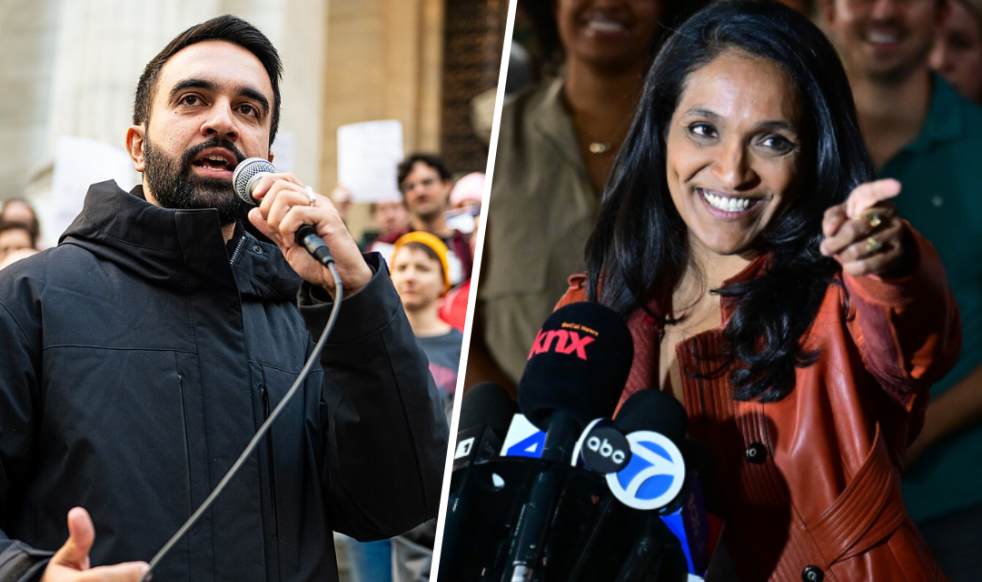
NEW YORK / LOS ANGELES — A historic moment is unfolding in American civic life. The nation's two largest cities are now led, or about to be led, by politicians of Indian heritage — a milestone that speaks to how fully immigrant and diaspora families have entered the highest reaches of American public service.
In New York, Zohran Mamdani, 34, was sworn in as the city's 112th mayor just mayor of South Asian descent, its first African-born mayor and its youngest leader in more than a century. On the West Coast, Nithya Raman, 45, won the November 2026 mayoral race and will be sworn in on Sunday, December 13, beginning her term Monday, December 14 — Los Angeles's first Indian-American and first Asian-American mayor.
New York: Ugandan-Born, Indian by Roots
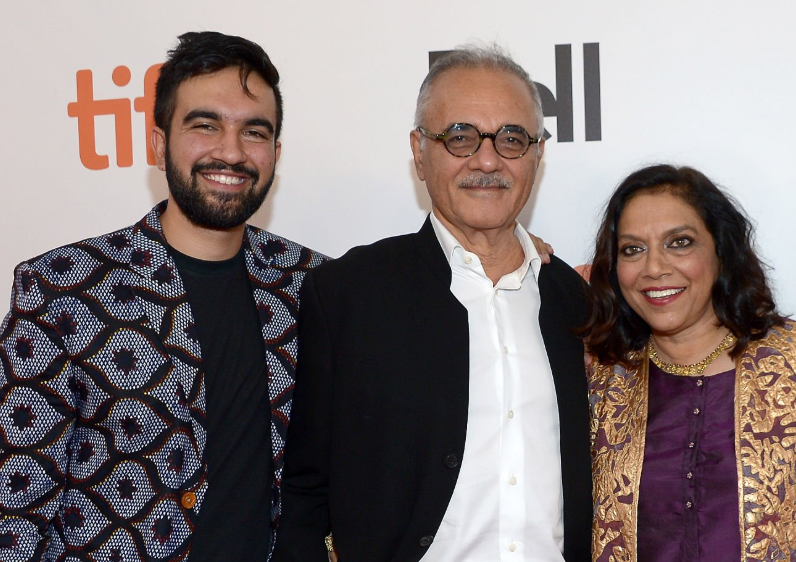
Mamdani's story is a vivid portrait of the global Indian diaspora. Born in Kampala, Uganda, he is ethnically Indian on both sides of his family. His father, Mahmood Mamdani, the Columbia University scholar of postcolonial politics, is a Gujarati Muslim from the Khoja community whose family belonged to the long-established South Asian diaspora of East Africa. His paternal grandparents were born in present-day Tanzania, and the family was among those displaced when Idi Amin expelled Uganda's Asians in 1972. His mother, Oscar-nominated filmmaker Mira Nair, was born and raised in India, in Rourkela and Bhubaneswar, Odisha, to a Punjabi Hindu family. Raised in an interfaith household, Mamdani identifies as Muslim while also having grown up with Hindu traditions.
He moved to New York at age seven, graduated from the Bronx High School of Science and Bowdoin College, worked as a foreclosure-prevention counselor, became a naturalized U.S. citizen in 2018, and later represented Queens' 36th Assembly District before launching his mayoral campaign. Centered on affordability, his campaign focused on housing costs, transportation fares, childcare expenses and the rising cost of everyday life. In his inaugural address, he pledged to govern "expansively and audaciously."
A Historic Mayor for New York City
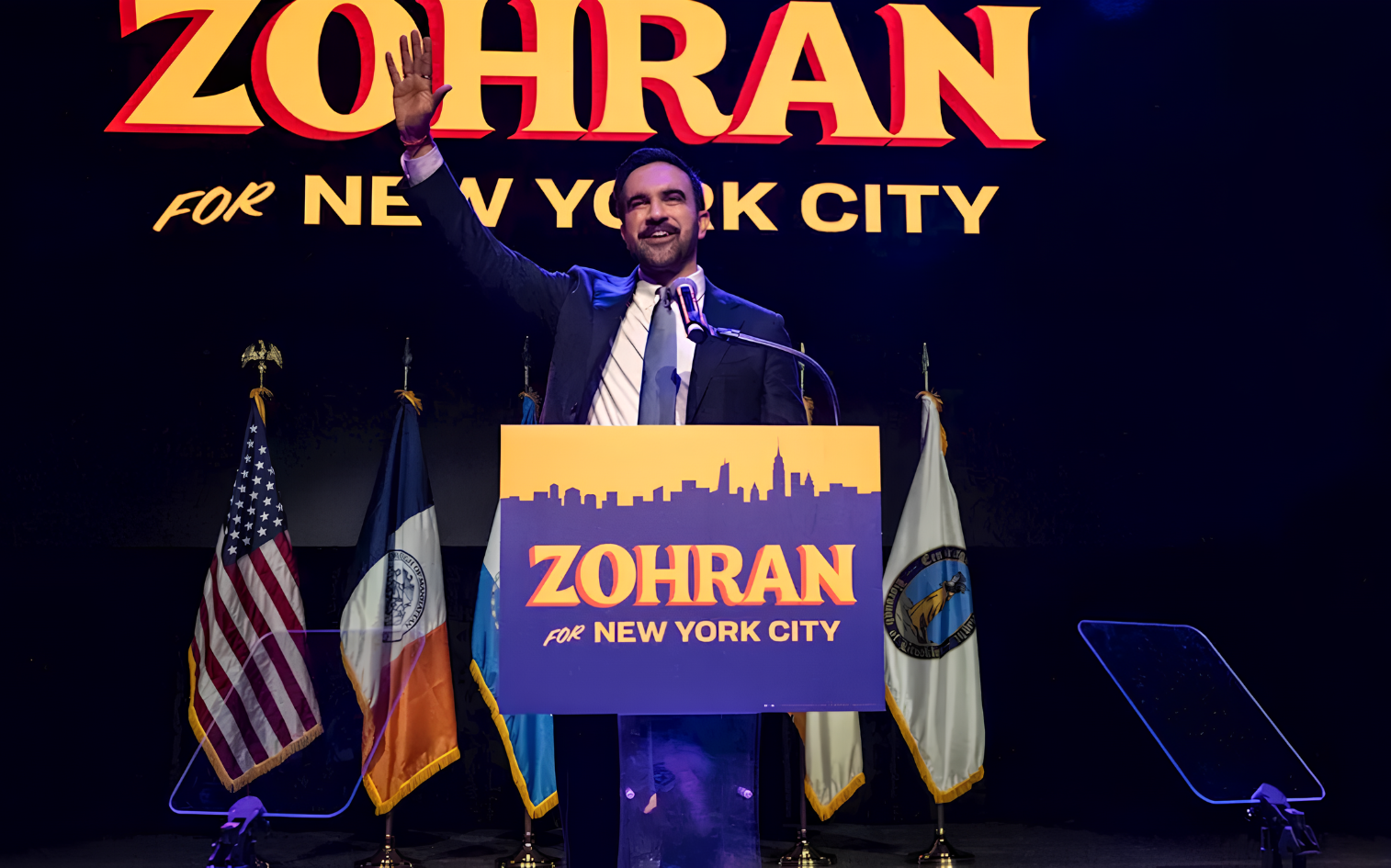
Shortly after midnight on January 1, 2026, the 34-year-old was sworn in as New York City's 112th mayor during a ceremony at the long-closed City Hall subway station. New York Attorney General Letitia James administered the oath on a centuries-old Quran, marking a first for the office. Later that day, thousands gathered outside City Hall for a public inauguration, where Senator Bernie Sanders administered the ceremonial oath and Representative Alexandria Ocasio-Cortez joined supporters in celebrating the occasion.
Mamdani's inauguration marked several historic milestones. He became New York City's first Muslim mayor, first mayor of South Asian descent, first African-born mayor, and the youngest person to lead the city in more than a century. Addressing the crowd, he pledged to serve all New Yorkers, declaring, "If you are a New Yorker, I am your mayor." Within hours of taking office, he signed executive orders focused on housing initiatives, and his administration later expanded access to kosher and halal meals through publicly funded food programs.
His election also reflected broader demographic and political changes that have reshaped New York over recent decades. Long a gateway for immigrants from South Asia, Africa, the Caribbean and Latin America, the city has become one of the world's most diverse urban centers. Mamdani's ascent from a Queens assembly member to mayor underscored the growing political influence of immigrant communities and a new generation of urban leaders.
A Symbol of the Global Indian Diaspora
Mamdani's family history reflects a broader story of Indian migration across the British Empire and beyond. For more than a century, Gujarati traders, professionals and laborers established thriving communities throughout East Africa, particularly in Uganda, Kenya and Tanganyika, now Tanzania. The expulsion of Asians from Uganda in 1972 dispersed many of those families across the world, creating transnational communities whose identities blended African, South Asian and Western influences.
Born in Uganda to an East African Indian Muslim father and an Indian Hindu mother, Mamdani's background connects several chapters of that larger diaspora experience. His family's journey from South Asia to East Africa and eventually to the United States mirrors the experience of millions of Indians who established communities across multiple continents while maintaining ties to their ancestral homeland.
For many observers, Mamdani's election represents more than a political milestone. It also symbolizes the increasing visibility and influence of the global Indian diaspora in public life. His rise from the child of immigrant parents to the mayor of America's largest city illustrates how diaspora communities have become an increasingly integral part of the political, economic and cultural fabric of the United States.
Mayor-Elect Nithya Raman Prepares to Lead Los Angeles
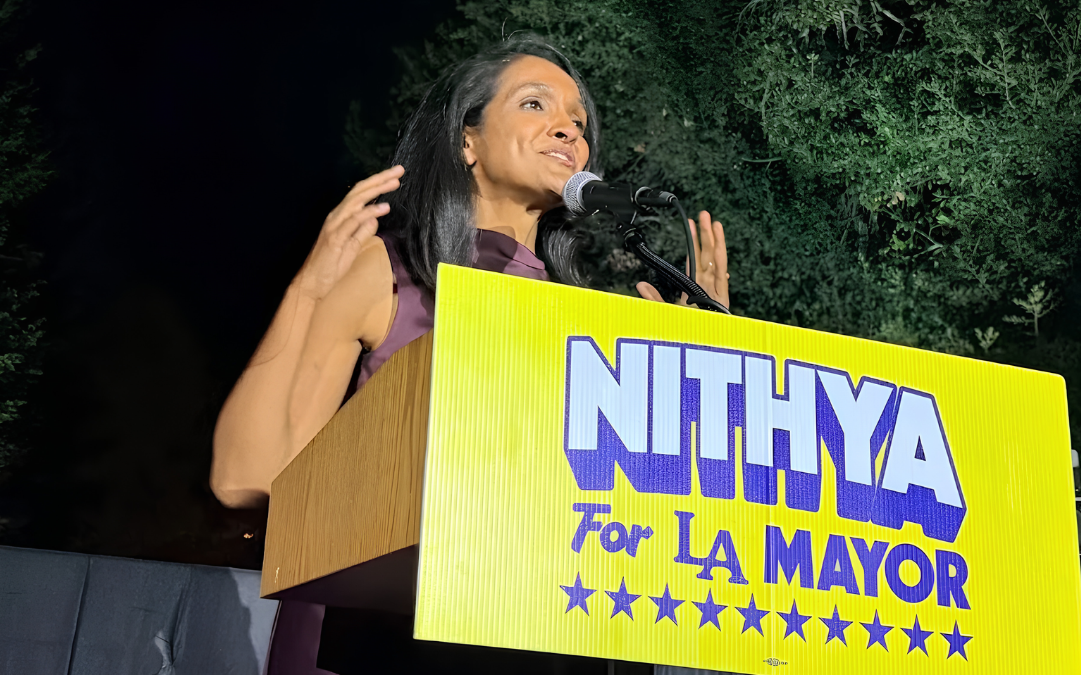
Raman's victory carried its own momentum. She defeated incumbent Mayor Karen Bass, who conceded on November 5, with final tallies showing Raman ahead by roughly nine percentage points, about 54.9 percent to 45.1 percent, with more than 1.1 million votes counted. The result made her the first Indian-American and first Asian-American mayor-elect in Los Angeles history, and only the second woman ever elected to lead the city.
Born on July 28, 1981, in Kerala, India, Raman came to the United States at age six, settling first in Louisiana before her family moved to Massachusetts. She later earned a bachelor's degree from Harvard University and a master's degree in urban planning from the Massachusetts Institute of Technology (MIT). Before entering elected office, she built a reputation as a community organizer, co-founding the SELAH Neighborhood Homeless Coalition and serving as co-chair of the Silver Lake Neighborhood Council's homelessness committee.
Her rise through local politics reflected years of engagement with neighborhood-level issues that increasingly shaped the broader policy debates of Los Angeles. In 2020, voters elected her to represent the city's 4th Council District, positioning her among a new generation of leaders focused on housing, homelessness and government reform.
Taking Charge of America's Second-Largest City
Voters sent Raman to the City Council's 4th District in 2020, and she went on to serve as assistant president pro tempore, earning a reputation for renter protections, housing supply and government accountability. Her mayoral platform blends ambition with management: eliminating street encampments within her first term, auditing city departments alongside Controller Kenneth Mejia to free up resources, appointing a Palisades recovery czar to speed rebuilding after the 2025 wildfires, creating a Hollywood film office, letting restaurants self-certify for outdoor dining, and planting 100,000 trees through a public-private partnership before the 2028 Summer Olympics.
She also takes the reins of a city preparing to host the LA28 Games, an opportunity her team frames as a catalyst for transit, housing and neighborhood investment.
Her election comes at a pivotal moment for Los Angeles, the nation's second-largest city and one of its most diverse metropolitan areas. The city faces persistent challenges related to housing affordability, homelessness, transportation infrastructure and public safety, while simultaneously managing major redevelopment projects and preparations for a global sporting event. As mayor, Raman will oversee a municipal government responsible for a budget of billions of dollars and services that affect nearly four million city residents. Her administration will be expected to balance long-term policy goals with the day-to-day demands of governing one of America's most complex urban centers.
A Milestone for Indian-American Representation and the Road Ahead
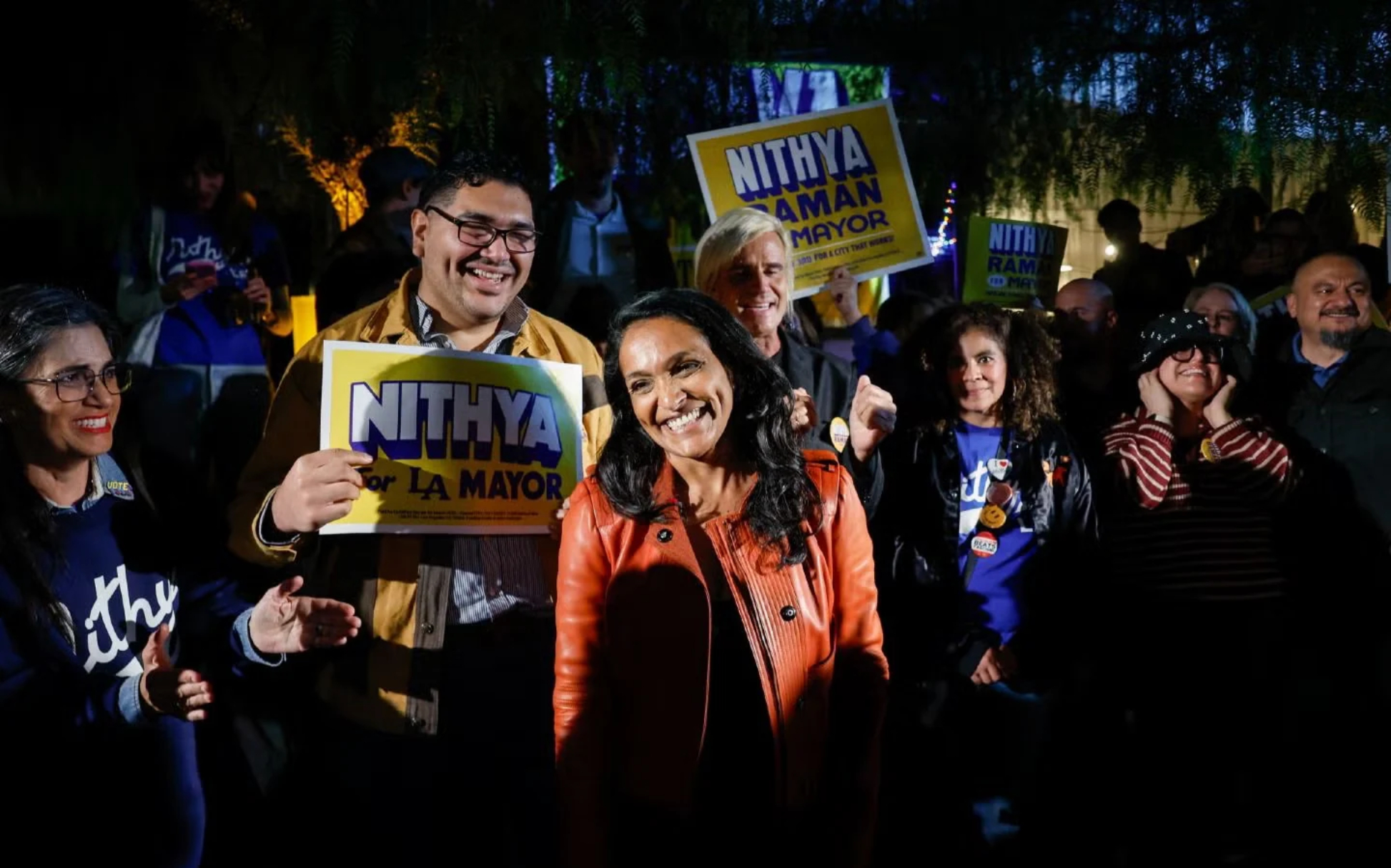
Raman's ascent also represents a significant milestone in the evolving story of immigrant and Asian-American political representation in the United States. Los Angeles County is home to one of the country's largest Asian-American populations, including a substantial Indian-American community. Her election adds to a growing list of South Asian Americans who have won executive and legislative offices across the nation during the past two decades. Political observers view this trend as part of a broader diversification of American leadership, reflecting demographic changes and the increasing civic engagement of immigrant communities and their descendants.
Beyond its symbolic significance, Raman's victory will ultimately be measured by her ability to deliver results on issues that dominate local concerns. Housing production, homelessness response, economic recovery, disaster resilience and infrastructure modernization are expected to define much of her first term. The approach she takes in confronting those challenges will be closely watched not only within Los Angeles but also by policymakers in other major U.S. cities facing similar pressures.
With the 2028 Olympics on the horizon and post-wildfire rebuilding efforts underway, her tenure begins during a period of unusual opportunity and intense public scrutiny. For supporters, her election marks both a historic breakthrough in representation and the beginning of a new chapter in Los Angeles governance. For residents, the years ahead will test whether campaign promises can be translated into measurable improvements in one of America's most influential cities.
A Reflection of America's Changing Cities
Both leaders came up through local organizing rather than political dynasties, and both made cost of living the heart of their message. Their simultaneous ascent reflects how thoroughly the demographics of American leadership have changed: one the son of Gujarati Muslim and Punjabi Hindu parents displaced from East Africa, the other a Malayali immigrant who arrived at six and became a U.S. citizen at 22.
New York and Los Angeles are not just America's biggest cities; they are global hubs of finance, culture, media and innovation, and decisions made in their mayoralties often become templates elsewhere. For millions of Indian-Americans and immigrants nationwide, the significance is clear — the ceiling in American civic life has lifted again.
The work ahead is real: budgets to balance, homes to build, streets to make safer, services to deliver. But the promise on display is equally real. Two cities known for taking in newcomers are now guided by two leaders who arrived as newcomers themselves — and voters chose them not for their backgrounds but for their plans, which happen to be carried by someone whose background looks like the city itself.